Entry Incentives Unifying Horse Racing, Tennis, and Casino Tables Across Single Platforms
Ben Carter · Jul 22, 2026
Entry Incentives Unifying Horse Racing, Tennis, and Casino Tables Across Single Platforms
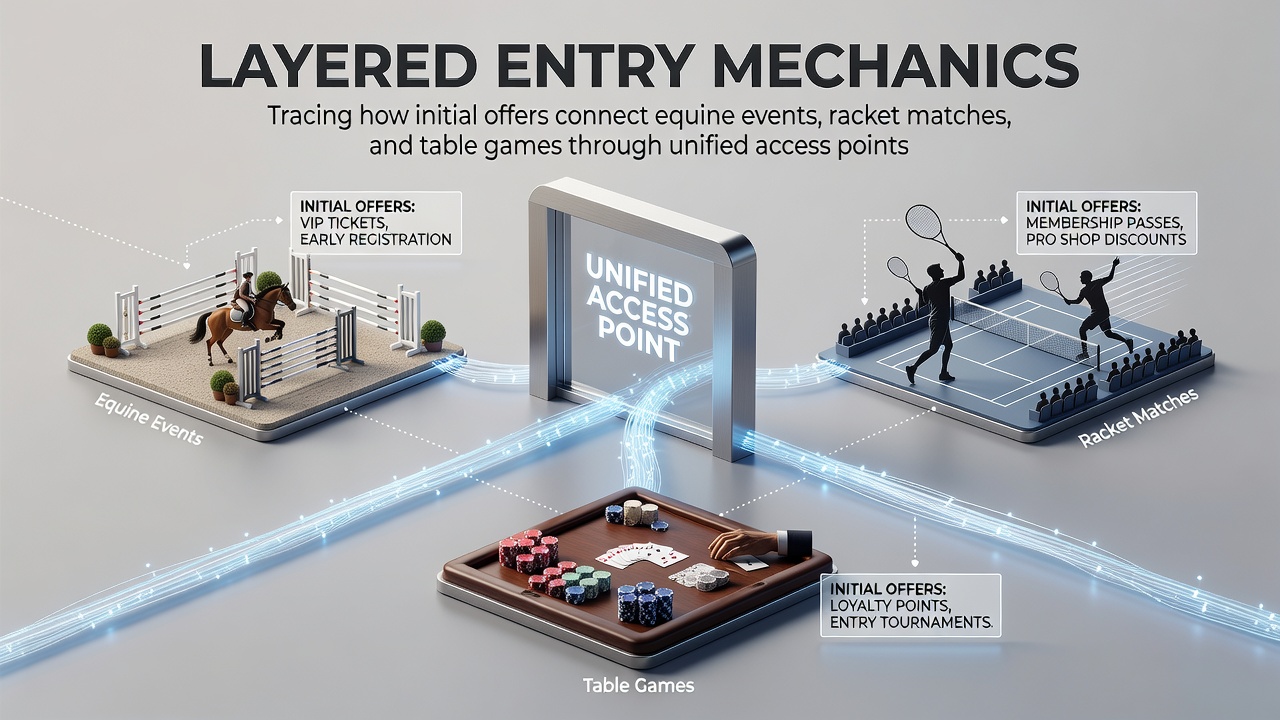
Layered entry mechanics operate through initial offers that route users from one gaming vertical into others via shared accounts and access protocols, and this structure has expanded notably since early 2025. Platforms create entry points with welcome incentives tied to equine events such as thoroughbred races, then extend those same credentials toward racket matches including tennis tournaments, while simultaneously opening table game sections featuring blackjack and roulette. Data from industry tracking services shows that users who activate an initial equine-focused offer complete an average of 2.3 additional sessions in racket or table categories within the first 14 days of registration.
Mechanics of Initial Offers and Vertical Routing
Initial offers function as gateways because they bundle credits or enhanced odds that apply across multiple categories once a single verification step completes, and operators design these bundles to encourage exploration beyond the entry category. A user signing up through a horse racing promotion receives a deposit match that carries over to tennis match betting lines, while the same account immediately unlocks table game lobbies without requiring separate registration. This routing relies on backend systems that synchronize user data across verticals, allowing seamless transitions from racetrack odds to court-side spreads and then to live dealer sessions. Observers note that such mechanics reduce friction points that previously kept bettors siloed within one sport or game type.
Connections Between Equine Events and Racket Matches
Equine events supply the initial draw for many users because race schedules provide frequent updates and clear outcome timelines, yet the same login credentials feed directly into racket match markets that feature different pacing and statistical models. A bettor who places a wager on a July 2026 stakes race can, within the same dashboard, shift to pre-match tennis lines or in-play racket points because the platform treats both as interchangeable data streams under one profile. Research from the American Gaming Association indicates that cross-vertical session rates increased 18 percent year-over-year in markets where unified entry mechanics were implemented, with equine-to-racket transitions accounting for a significant share of that growth. The technical layer involves API connections that pull odds from separate suppliers while maintaining a single balance and history log.
Operators further strengthen these links by structuring bonus terms that reward activity across both categories, such as requiring a minimum number of settled equine bets before unlocking enhanced tennis odds. This approach creates a progression path where early engagement with horse racing naturally leads toward racket match participation without additional onboarding steps.
Extension Into Table Games Through the Same Access Layer
Once users move from equine and racket sections, table games become available through the identical account framework, and layered mechanics ensure that any remaining bonus value or loyalty status carries forward. Table game entry often activates after a set number of settled sports wagers, turning initial equine or tennis activity into credits usable at blackjack or baccarat tables. Systems log these transitions as sequential events within one user journey, allowing operators to track how an offer originating in horse racing ultimately influences table game volume. Figures released by the Canadian Gaming Association reveal that platforms employing unified access points recorded a 27 percent rise in table game participation among users who began with sports verticals during the first half of 2026.

The integration relies on real-time balance synchronization and shared promotional ledgers, which means a player finishing a tennis match wager can immediately apply remaining funds or free spins to a table game round without navigating separate menus or wallets. This continuity reduces drop-off rates that occur when users must create additional profiles for casino sections.
Technical and Regulatory Context in Mid-2026
Platform architectures supporting these layered mechanics use centralized identity management combined with modular game servers, enabling rapid addition of new verticals while preserving the entry offer structure. Regulatory frameworks in several jurisdictions now require clear disclosure of how initial offers extend across categories, and compliance reporting from July 2026 shows operators updating terms to reflect multi-vertical usage patterns. Academic analyses from the University of Nevada, Las Vegas gaming research division have documented that unified access points correlate wth higher lifetime user value metrics, though the studies emphasize correlation rather than causation. These findings align with operational data indicating that users who engage multiple verticals through shared entry mechanics maintain accounts for longer average durations.
Conclusion
Layered entry mechanics continue to shape how operators connect equine events, racket matches, and table games by channeling initial offers through single verification and account systems. The structure allows users to begin in one category and progress into others while carrying forward incentives and balances, and current platform designs prioritize this continuity as a core feature rather than an add-on. As integration standards evolve, the pathways between these verticals are expected to become even more direct while maintaining the factual reporting requirements already established across regulated markets.