Payment Innovations Bridging Racetracks, Basketball Arenas, and Casino Floors
Lars Sullivan · Jun 1, 2026
Payment Innovations Bridging Racetracks, Basketball Arenas, and Casino Floors
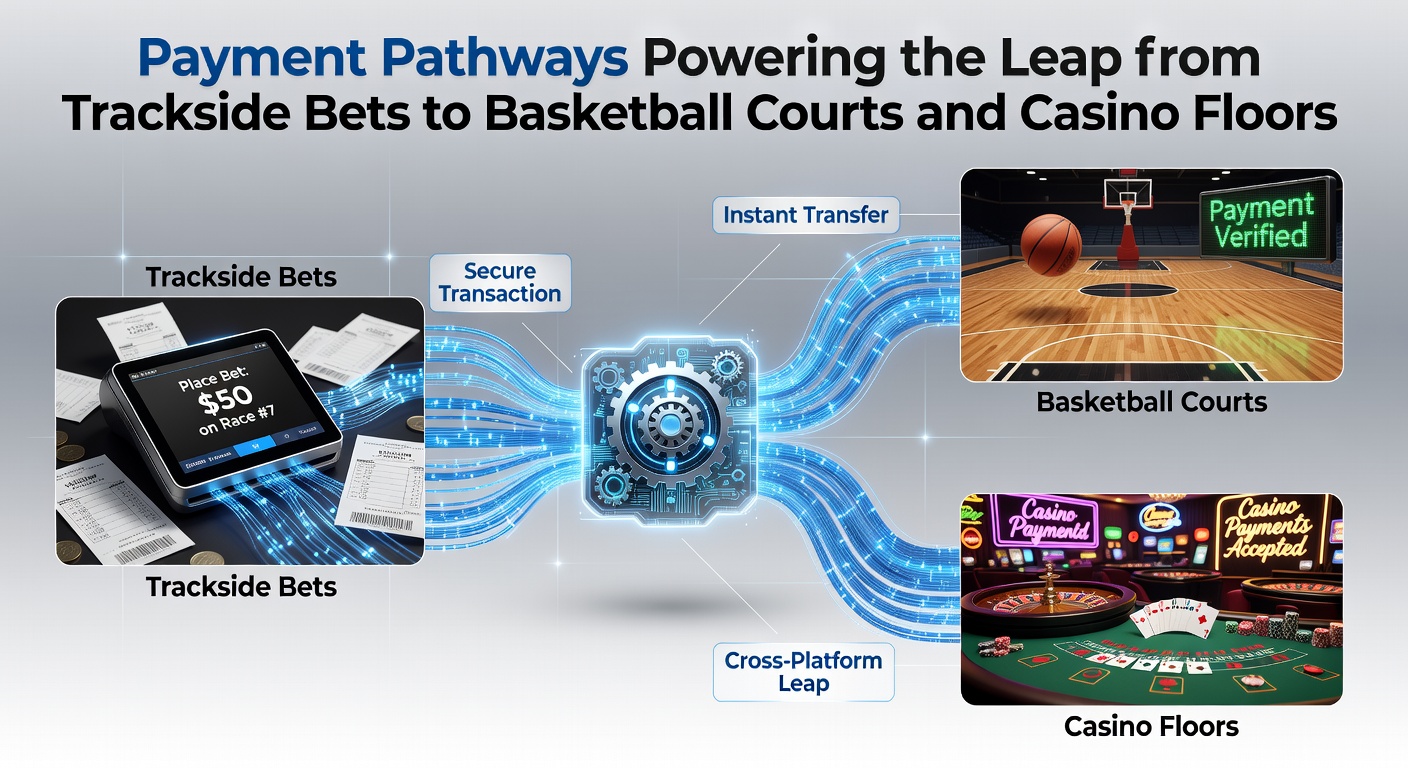
Payment systems have become central connectors in gambling markets where participants move between horse racing bets, basketball wagers, and casino table games, and data from industry reports shows these networks support account continuity across platforms without repeated verification steps. Electronic wallets and instant bank transfers now handle deposits and withdrawals that keep balances synchronized, allowing users to shift focus from one event type to another within the same session.
Core Payment Mechanisms at Racetracks
At racetracks operators integrate point-of-sale terminals with mobile apps that accept credit cards, e-wallets, and direct bank links, and these systems record transactions in real time so funds remain available for subsequent activities. According to figures from the Australian Gambling Research Centre, transaction volumes at major tracks rose steadily through 2025 as operators adopted unified ledgers that eliminate separate account setups for each betting vertical.
Observers note that cashless kiosks reduce processing delays, while digital receipts feed directly into user profiles that carry over to other sports and gaming environments, and this continuity matters because participants often place initial wagers on races before checking basketball lines later in the same day.
Expansion into Basketball Markets
Basketball betting platforms have adopted many of the same payment rails, and mobile apps now support one-tap deposits that mirror racetrack interfaces so users experience minimal friction when switching focus. Research indicates that live betting during quarters relies on rapid fund movements, and payment processors have responded by offering instant confirmation for both deposits and cash-outs tied to in-play events.
Those who manage multi-platform accounts report that shared payment tokens allow balances to update across racing and basketball products without manual transfers, and regulatory data from several US state gaming commissions shows these features correlate with higher session counts that span different event categories.
Integration with Casino Environments
Casino floors and online dealer platforms connect through the same digital pathways, and operators have introduced unified wallets that accept funds originating from sports bets while maintaining separate ledgers for table games and slots. In June 2026 several European jurisdictions began testing standardized API frameworks that let licensed operators share payment verification across verticals, reducing redundant compliance checks for returning users.
Payment providers supply features such as scheduled withdrawals and loyalty-linked bonuses that activate regardless of the originating bet type, and industry associations tracking these developments note that transaction logs help operators monitor responsible gaming limits across the full range of activities.
Security and Compliance Standards
Encryption protocols and two-factor authentication apply uniformly whether funds move from a racetrack terminal to a basketball app or onward to a casino account, and third-party audits confirm that these controls meet requirements set by multiple oversight bodies. Data from the National Sports Gaming Association indicates that platforms using end-to-end encryption record lower dispute rates, which supports broader adoption among operators who serve cross-vertical users.
Compliance teams review transaction patterns for signs of unusual activity, and automated systems flag sequences that might indicate problem behavior regardless of whether the activity occurs on racing, basketball, or casino products, and this unified monitoring reduces the need for separate review processes at each venue type.
Future Developments in Transaction Networks
Emerging technologies such as instant settlement rails and token-based transfers continue to shorten the time between a winning basketball wager and its availability for casino play, and pilot programs in several markets test blockchain-based ledgers that provide immutable records while preserving user privacy. Observers expect these systems to expand further as regulators finalize rules for cross-border payment compatibility in 2027.
Conclusion
Payment pathways now form the operational backbone that lets participants move between trackside, court-side, and casino environments with consistent account access and transaction speed, and continued investment in unified systems supports both operational efficiency and regulatory oversight across these sectors.